

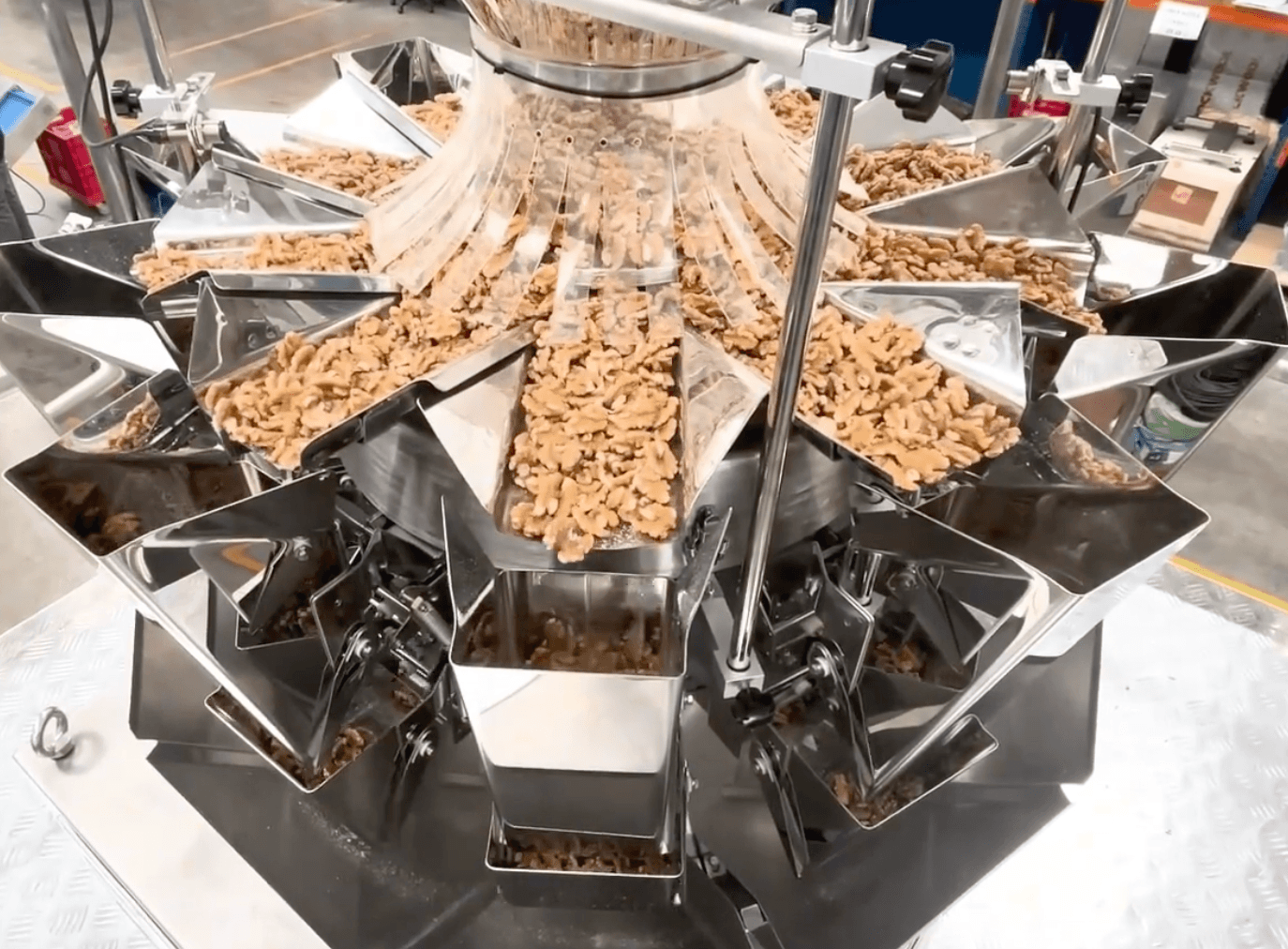
Industrial Packaging Process Optimization: How Much Product Could You Be Losing?
Do you know how much product you could be losing on your production line? In the food industry, small dosing deviations can become a significant cost when they are repeated across thousands of packages every day.
Industrial packaging process optimization is not just about increasing production speed. It also involves controlling the amount of product placed in each package, reducing waste and improving the efficiency of the entire process.
Having a packaging solution tailored to the product’s characteristics helps improve dosing control, automate operations and achieve more consistent production.
In this article, we explain which aspects you should review to optimize your packaging process and how combining a vertical packaging machine with a multihead weigher can help improve production line efficiency.
What Is Industrial Packaging Process Optimization?
Industrial packaging process optimization involves improving the different stages of packaging to make better use of resources, maintain product quality and achieve efficient production.
To achieve this, it is necessary to analyze factors such as dosing accuracy, operating speed, automation, packaging format and raw material characteristics.
A well-configured packaging line should meet each company’s production requirements while balancing productivity, product control and the quality of the finished package.
Reducing Waste and Making Better Use of Raw Materials
One of the most important aspects is preventing unnecessary product losses. These can occur during handling, dosing or the packaging process itself.
In addition, when a system consistently dispenses more product than required, the company may be using more raw material than necessary for each unit produced.
Controlling these deviations helps identify opportunities for improvement and assess their impact on the cost per package.
Improving Packaging Line Productivity
Efficiency also depends on maintaining a stable production process. Coordinating equipment, automating operations and configuring machinery correctly can help reduce manual intervention and improve production continuity.
The goal is not to increase speed at any cost, but to ensure that the line operates efficiently and is adapted to the product’s characteristics.
How to Improve Dosing in Industrial Packaging
Dosing is a key factor in optimizing a packaging line. Dispensing too much product per package can increase raw material consumption, while insufficient quantities may fail to meet the declared net weight and applicable requirements.
That is why it is important to adapt the weighing and dosing system to the product, the packaging format and production targets.
Controlling the Weight of Each Package
Weight control makes it possible to check dosing consistency and identify potential deviations from the target weight.
For food products such as nuts, seeds and snacks, differences in the size and weight of individual pieces make it particularly important to select the right weighing technology for the application.
A correctly configured system can help improve process consistency, taking into account the product’s characteristics and actual operating conditions.
Choosing Equipment That Matches the Product
Not all products require the same dosing system. Physical characteristics, fragility, piece size and how the product behaves during discharge all influence equipment selection.
Before choosing a packaging solution, it is therefore advisable to assess the specific requirements of each application and determine which technology best suits the production process.
Vertical Packaging Machine and Multihead Weigher: A Solution for Process Optimization
Combining a vertical packaging machine with a multihead weigher is a common solution for packaging solid products such as nuts, snacks and other food products.
The multihead weigher calculates the most suitable product combination to achieve the target weight, while the vertical packaging machine forms the bag, receives the dosed product and seals the package.
How Does a Multihead Weigher Work?
A multihead weigher uses several weighing heads to calculate product combinations that are close to the programmed target weight. It then releases the selected combination into the packaging machine.
This system is particularly useful when packaging products made up of individual pieces with varying sizes and weights, such as many types of nuts.
What Does a Vertical Packaging Machine Offer?
A vertical packaging machine forms bags from packaging material and carries out the filling and sealing operations.
When integrated with a suitable weighing system, it allows dosing and packaging stages to be coordinated within a single production line.
The final configuration will depend on the product, bag format, required production output and the specific needs of each company.
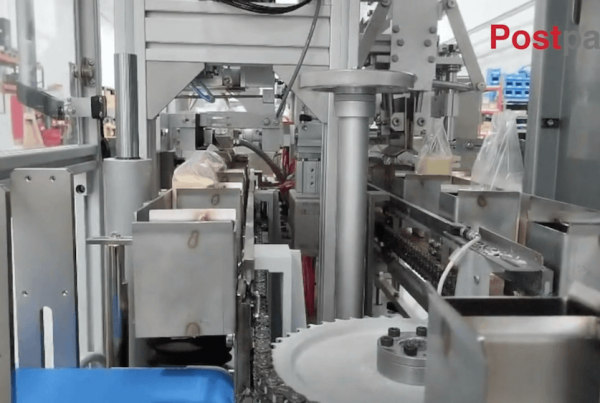
Video: Industrial Packaging Process Optimization for Nuts
In this video, we showcase a Postpack solution combining a vertical packaging machine with a multihead weigher for packaging nuts.
This demonstration illustrates how weighing and packaging can be integrated into an automated process designed to improve dosing control and meet specific production requirements.
How to Calculate the Cost of Overfilling
To assess the impact of dosing on production costs, you can estimate the additional product used over a given period.
To do this, you need to know the average excess product per package, the number of units produced and the cost of raw material per kilogram.
Additional product in kg = average excess per package in grams × number of packages ÷ 1,000
Estimated cost = additional product in kg × cost per kilogram
For example, if a production line has an average excess of 2 grams per package and produces 10,000 packages, the additional product used would amount to 20 kg. The financial cost will depend on the price per kilogram of the raw material.
This calculation helps illustrate how small deviations can accumulate throughout production. The actual improvement achievable will depend on the available adjustments, weight requirements and product variability.
What Should You Review to Optimize Your Packaging Line?
Before installing new equipment or modifying an existing system, it is advisable to assess the main parameters of the process.
- Product: type, size, weight, fragility and behavior during dosing.
- Packaging format: bag dimensions and packaging material characteristics.
- Dosing: target weight, observed deviations and required accuracy.
- Production: units per minute and capacity requirements.
- Automation: equipment coordination and operations that can be integrated.
- Maintenance: equipment condition and review of operating parameters.
Assessing these factors helps identify the most relevant improvements for each production line and select a solution that meets the company’s objectives.
Postpack: Solutions for Industrial Packaging Process Optimization
Improving the efficiency of a production line requires a solution tailored to the product and the needs of each process. Controlling dosing, reducing excess product and coordinating weighing with packaging are essential to making better use of available resources.
At Postpack, we offer industrial packaging solutions for a wide range of products and sectors. Assessing the characteristics of each application helps determine which configuration may best meet specific production requirements.
Would you like to improve the efficiency of your packaging line?
Contact Postpack to discuss your product requirements and find a packaging solution tailored to your process.